
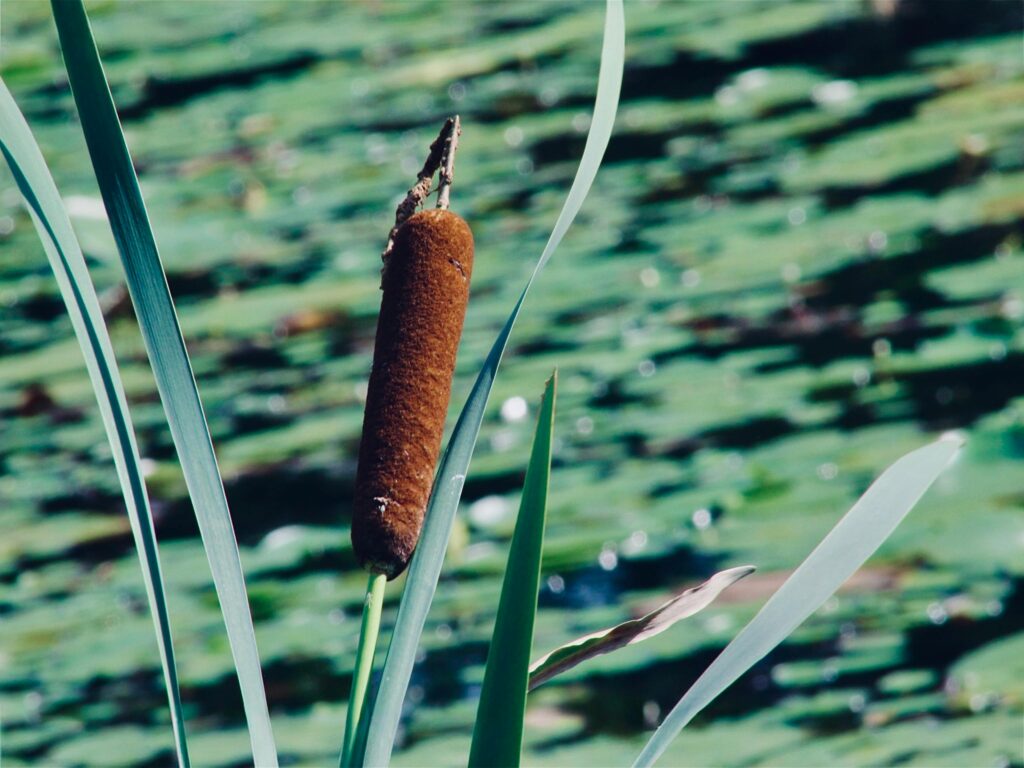
Post #94 Plant Profile: Cattail (Typha latifolia)
A forager’s delight, the humble cattail provides more than just a food source. It’s also harvested for an abundance of other uses, which we will discuss today.
There are several varieties of cattail, and some are invasive in South Florida, so it is important to clarify that we are discussing the Typha latifolia variety in this post.
The Typha latifolia Cattail is considered native to the United States. Also commonly called bulrush, cattail is a wetland plant, aquatic to semi aquatic in nature. It thrives in flooded areas up to 18 inches deep.
If you grew up anywhere near a body of freshwater, including seasonal ditch creeks, irrigation ditches,marshes, ponds, lakes, or rivers, you are most likely familiar with this useful, edible perennial.
The plant itself can grow anywhere from 6-12 feet tall, and consists of several shoots or stems and flat, bladelike leaves. Each stem forms a unique, cylindrical, flowering spike that ultimately bursts with fluffy seeds.
Cattail readily spreads in the wild through its extensive underground rhizome colonies, but is also purposefully planted as an ornamental around garden oases.
A colony of cattails provides a wonderful nesting environment for many bird species. The plants provide food, shelter, and nesting material, as well as assurance of clean water to drink and bathe in.
You may also spot cattails in dried flower arrangements. The sheer size, combined with its stunning brown inflorescence make for a very pretty centerpiece when juxtaposed with other dried, flowering plants..
A Word to the Wise
Cattail is a phytoremediator. A phytoremediator is a plant that cleans and purifies the air, water and soil of pollutants. This a fantastic boon to the environment, but makes the plant itself not fit for consumption. The plant then stores these pollutants in its cell tissue, so if a human or animal consumes a pollutant-filled plant, the pollutants will be transferred to the human or animal’s body as a toxin.
To avoid this, only harvest cattail for consumption in clean areas and waterways unadulterated by humans or industry. Stay away from cattails growing on the side of the road or empty city lots where toxic run-off accumulates.
How do you grow Cattail?
As we mentioned, Cattail grows readily from rhizome or seed. They thrive in full to partial sun, rich, soggy soil, and need little to no fertilization. If you know of a good place to harvest a clump, growing from rhizomes will produce a mature plant faster than seeds, and with less fuss.
To Grow From Rhizome
First, scout a boggy, soggy spot in your garden to plant the rhizomes once harvested. Remember this plant spreads underground, so if you want to establish a colony, be sure to locate an area with plenty of space around it.
Prepare for planting by digging a deep hole, 12 inches deep and 18 inches in diameter, give or take. Or, if you plat to break up the clump into several chunks to establish a colony faster, simply dig several smaller holes at least 12 inches apart from each other.
You’ll want to harvest the clump of cattail shoots for transplant in the spring when they are about 18 inches tall.
Locate an unpolluted area thick with established cattails where you can responsibly and sustainably harvest a clump.
To harvest, dig down in the mud or bog to the rhizomes. Using clean, sharp shears, cleanly cut the rhizomes, giving a wide berth around the clump you wish to harvest.
Repack the mud around the cattails you are leaving to grow, and put your harvested clump in a bucket for transport, it will ideally be very wet and messy!
Plunk the clump into its new home, repack the mud around it, and make sure it stays very wet to soggy until very well established. Plan to begin harvesting the following year.
To Grow From Seed
Harvest mature seedheads in the early fall. Prepare the seeds by soaking them for 24 hours, this will allow you to more easily seperate fluff surrounding the seeds. Let you cleaned seeds dry, then start them in containers for the best possible outcome.
Press the prepared seeds into a presoaked start mix heavy in compost in seed trays or 2 inch pots. Cover the seeds with a ¼ inch of the start mix. Use a germination mat underneath and secure with tray covers or a plastic dome to cover small pots.
Water the starts once a day, keeping evenly moist and never allowing the soil to begin to dry out. The seeds will take about 14 days to germinate.
Once the starts are well established, about 2-4 inches tall, transplant them to a prepared boggy, soggy area to grow into mature plants. They will prefer to be planted during cool weather, and ideally after a nice rainfall in autumn.
Keep them wet to soggy and watch them grow!
How to Harvest and Use Cattail
For food:
The entire plant is edible and highly nutritious. To eat your way through the stages of the cattail’s life cycle, follow along here:
Springtime – enjoy the shoots as they emerge and reach a height of 2-3 feet. Harvest and peel the fibrous layers away to reveal a tender stalk which can be eaten raw in salads or sauteed. You can continue to harvest these stalks all the way through the fall season, but they will get increasingly tougher. Pickling is a great way to use the older stalks.
Early Summer – The spikes begin to emerge. You will need to peel back the leaves as you would on a cornstalk to reveal the spikes. The female spike will be green at this stage, and the male spike will be located on top, filled with pollen. Harvest the spikes and boil and eat as you would baby corn stalks. You can also eat them raw at this stage.
Mid Summer – Harvest the pollen. The male spikes will be heavy and abundant with it. This is a highly nutritious food which is commonly added to pancake or cornbread batter to boost nutrition.
Late Summer into Early Fall – The rhizomes are ready to be harvested, dried, and milled into a gluten-containing flour. This is the most abundant, edible yield the cattail offers.
Folk Medicine:
Rhizomes – cut open and bruise before applying as a poultice to burns, stings, bruises, or cuts.
Ash – burn cattail leaves and reserve the ash to apply as an antiseptic to cuts and wounds. It can act as a styptic, to stop bleeding, in dire circumstances.
Liquid “Goo” – an excretion found by peeling back the leaves and looking to the base of the plant, this goo is also antiseptic and is particularly helpful for easing toothaches among other things.
Other Ways Cattail Has Traditionally Been Used:
- Weaving – the leaves are strong and perfectly shaped for this purpose. Weavers make baskets, containers, mats, and even beds from the leaves.
- Stuffing – the soft downy material in the mature seed head was used to fill life jackets and flotation devices in WWII, Native Americans lined their moccasins with it, and it can be used to stuff coats and other clothing, not to mention pillows and blankets, for warmth as well.
- Arrows – the mature stalks can be dried and used for this purpose.
- Firestarter – all of the plant, when dried, is great fodder to feed a fire, especially in the wild, but the fluff itself is an invaluable firestarter.
- Impromptu Torch – light up your primitive campsite (or backyard for fun) by dipping the mature seed head in animal fat or oil and light the tip on fire. It should burn slowly and evenly as a sustained source of light.
Endlessly versatile, why wouldn’t you want to host a colony of cattails in your forest garden? If your environment supports it, give it a go!
If you already have a stand growing in your garden, what do you use it for? Is it merely a beautiful ornamental, or a hardworking jack of all trades? Share with us in the comments below, we love hearing from you!
Until Next time,
Happy Gardening,
Mary