
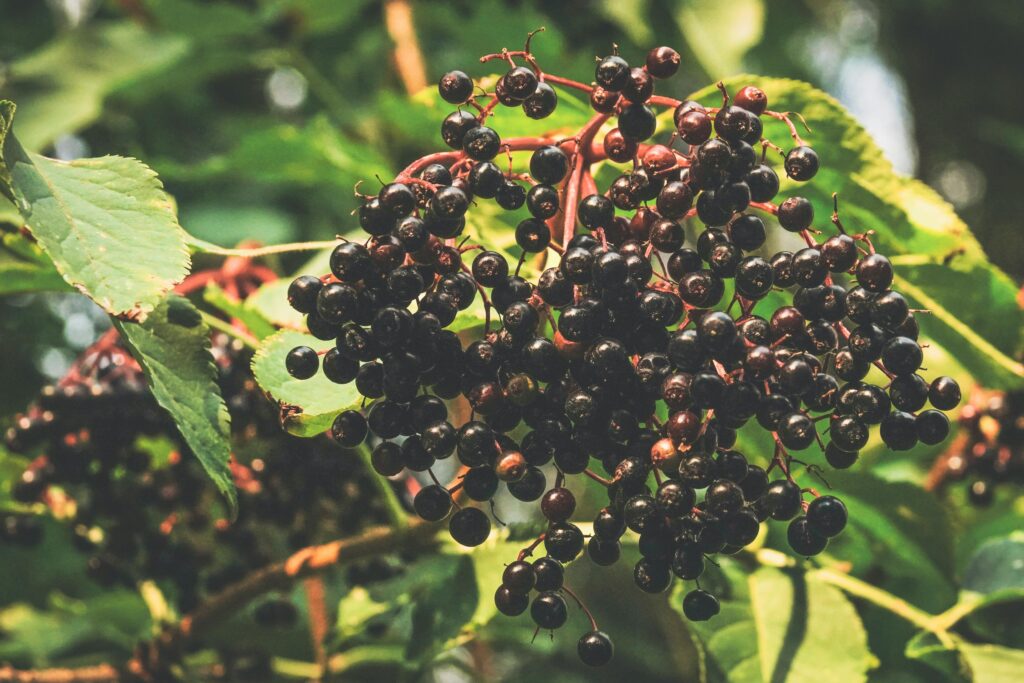
Post #100 Plant Profile: Elderberry (Sambucus nigra, ssp. canadensis)
A classic edible perennial, various varieties of elderberry are native across the North American and European continents. Though more common in the slightly cooler areas, there are varieties that run wild and happy amongst our little corner of the world here in South Florida.
Elderberry plants grow as large, bushy shrubs but can be trained to be more “treelike”. They can be used beautifully as border plants in ornamental or forest gardens alike.
A powerhouse of nutrients and pollen in season, bees and butterflies will seek these plants out as they fly above your neighborhood. The berries are also highly nutritional for humans as well when processed properly. There’s no real downside to growing this plant, just don’t eat it raw! More on that later.
Well, let’s jump right in because there is much to discuss when it comes to this mighty and plentiful berry.
American, European, or Florida Native?
American elderberry (Sambucus canadensis), European elderberry (Sambucus nigra), and the Florida (Sambucus spp.) all grow in varying degrees across North America and Europe.
American Elderberry, native to North America, is very hardy and yields reliably large harvests of berries. It grow quite well in South Florida, also harvests tend to be larger in areas up north. The plants benefit from the cooler winter weather during dormancy.
The European Elderberry tends to be the most common cultivated variety, even in the United States. It grows larger and taller than other varieties and yields larger, almost black, berries.
The Florida variety grows in the wild as a hardy plant with superior resistance to local pests and diseases. It is not particularly reliable when it comes to berry yields, however, so it is not a favorite of cultivators – even in its native Florida environment.
Nutrition Abounds!
Folk medicine has long held elderberries as the pinnacle of immune-boosting herbs, and for good reason.
A fantastic source of vitamins A, C, and E, as well as minerals phosphorus, potassium and iron, it is also rich in antioxidants, such as anthocyanins, and additional phytonutrient compounds that support immune health.
How do you use Elderberry?
Both the fruits (berries) and flowers are consumed. As we mentioned, they must first be cooked or dried so as not to cause stomach upset or illness.
The fruit and flowers are used to make juice, wine, distilled spirits, simple syrups, teas, and food and textile dyes.
As a food they are processed to make preserves, chutneys, pies and more. They lend well to combining with other berry varieties such as black berries, gooseberries, and raspberries for some really delicious and antioxidant-rich treats.
As medicine they are made into concentrated syrups and tinctures. Traditionally, these medicines are taken daily during the cold seasons to boost immunity and keep illness at bay. It has also been noted to help ease the symptoms of infection, headaches, nerve pain, heart pain, and dental pain. Additionally, it is a known diuretic and laxative.
Beware
The leaves, stems, roots, and unripe berries of the elderberry plant are poisonous to both humans and livestock due to their cyanic glucoside content. Even ripe berries can cause mild illness if eaten in quantity.
The good news is that cooking or drying the berries renders the toxic compounds harmless, and actually improves the taste of the berries as well. So just as long as you process the berries wisely, you can reap all of the nutritional and medicinal benefits without the poisonous effects!
How do you grow Elderberry?
The American elderberry can grow as tall as 12 feet and bush out similarly if left to its own devices. Most growers will keep the size down by pruning, which can be done beginning in the third year of growth during the dormant season. So consider the size you plan to keep your mature plants at when spacing out seedlings.
The plants are generally grown from cuttings and sometimes seed.
To grow from cuttings
Either hardwood or softwood cuttings can be used for propagation. Generally, plants grown on a commercial scale are all propagated using hardwood cuttings.
Harvest hardwood cuttings in late winter, generally between January and March from canes grown in the previous season. Each cutting should have two nodes to ensure successful growth. Dip the end in rooting hormone, then plant in a prepared bed or in small pots. They should be planted so the nodes are about 2 inches under the surface of the soil.
Although it is generally considered best to directly plant cuttings into the ground, they prefer a warm, moist soil. So consider the soil temperatures when planning to plant directly in the ground. Depending on the time of year, it may be prudent to start them in pots so you can better control the environment.
In the ground, the new plants should root well within 4-6 weeks, in pots it may take up to 8 weeks. Once established, the plants will grow quickly.
Harvest softwood cuttings during the growing season before the established plant begins to flower. Remove all but the top leaves from the cuttings and plant in pots with a sterile rooting mixture such as sand and peat moss. Planting softwood cuttings directly in the ground will often result in decay and failed starts. You will have to keep a close eye on these cuttings to make sure they have an evenly moist and warm environment. Once established, they can be transferred directly into the ground the following season.
To grow from seed
Albeit more difficult than growing from cuttings, elderberries can be propagated from seed. In the wild the plant may self-seed, but mimicking the conditions needed to grow from seed at home or on a commercial scale is a bit tricky.
If you want to try your hand at growing elderberries from seed, it certainly is possible. They require a period of cold stratification. The simplest way to do this is to stick the seeds in your refrigerator for 4-6 weeks prior to when you intend to use them. This cold stratification breaks down the outer seed coating, so that when the seed is planted water can enter to encourage germination.
Once the cold stratification period is complete, the seeds must then be planted in a good, organic seed starting mix and set to germinate on top of a warming pad or in an otherwise warm situation. This mimics the seeds overwintering in the wild, then germinating with the warming of the ground and air in the Spring.
Different growing conditions may cause more variability in fruit and flower compositional quality than varietal differences, making cultivation techniques and environment important factors.
How to Harvest Elderberry
In the first year, pinch off the flower buds to stimulate root development. In the second year, you can begin to harvest the berries. The plants hit peak production in years 3-5.
Here in South Florida you can harvest the berries as early as June and all the way through August.
Hand harvest each cyme as it becomes ripe, and process immediately. The Florida heat will diminish the nutritional and medicinal values of the berries rather quickly. Freeze, juice, or dehydrate the berries directly following their harvest.
Pesky Considerations
Elderberry is susceptible to a fair amount of pests and disease, especially in our balmy South Florida environment.
Keep plants healthy by keeping them evenly moist in well draining soil, do not over crowd to allow for proper airflow, and fertilize regularly to solve for nutrient deficiencies.
Pests to look out for:
- Armyworms (Mythimna spp.)
- Eriophyid mite (Phyllocoptes spp.)
- Japanese beetles (Popilla japonica)
- Leaf-footed bug (Leptoglossus zonatus)
- Spider mite (Tetranychus urticae)
- Spindle worm borer (Achatodes zeae)
- Spotted-wing Drosophila (Drosophila suzukii)
- Stink bug (Halyomorpha halys)
Common Fungal Diseases:
- Cankers
- Cercospora
- Elderberry rust
- Leaf spots
- Powdery mildews
Where can you find Elderberry for sale?
Like so many of our favorite edible perennials we discuss in this blog series, you may not need to look further than your neighbor’s yard to find a specimen. Next time you take a walk around your neighborhood, look around to see if you can find any healthy, well established elderberry plants.
When you find one or two, identify whose house they are located at and bring that neighbor a pie! Or see if you have any plants you can offer cuttings from and do a trade.
Conversely, you can find plants for sale at local nurseries, just pay attention to the variety you are purchasing. At the right time of year you may find some industrious gardeners offering established cuttings/small plants at local plant sales. Keep an eye out!
Do you regularly use elderberry lozenges or syrups during the winter months? If you do, consider growing this plant in your own backyard. Or if you are already growing it, is it an ornamental addition to your garden or do you process the berries for food or medicine?
Tell us all about it in the comments below! If you have a favorite recipe to share, we’d love to see it. A tip on keeping pests away? Share that too! It is always wonderful to hear from you, our dear readers and fellow South Florida forest gardeners!
Until Next time,
Happy Gardening,
Mary