
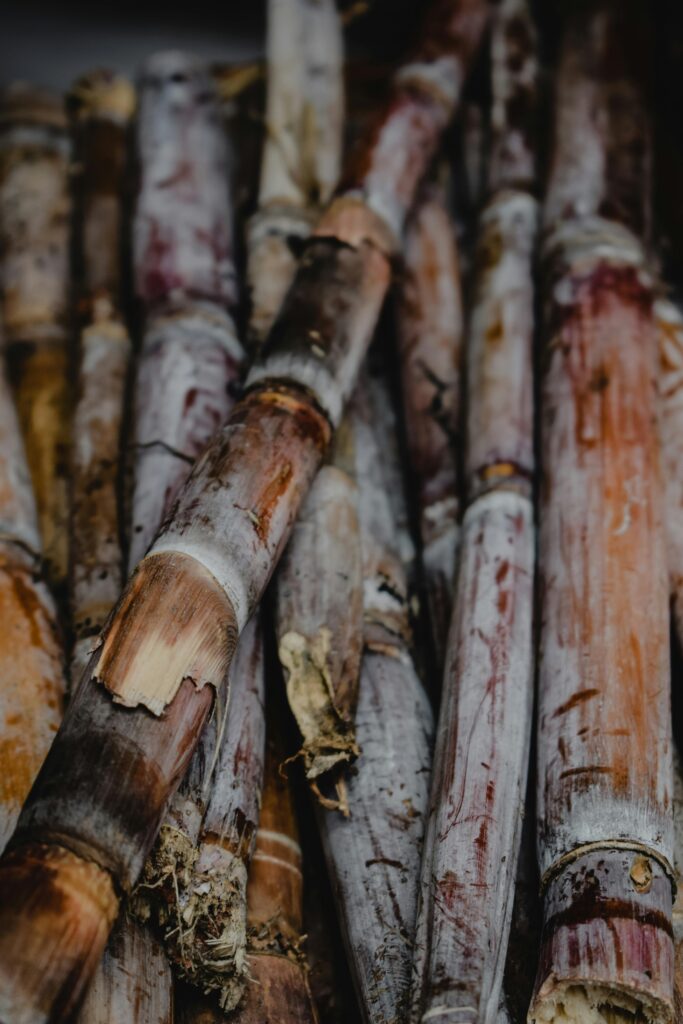
Post #101 Plant Profile: Sugarcane
Today we devote our post to sugarcane, another fantastic edible perennial favorite of ours. Sugarcane is a ubiquitous crop grown around the world. We’re guessing you’ve heard of it! It is actually the largest crop grown in the world, with Brazil, India, and China leading production.
We are excited to shine a spotlight on sugarcane today because here, in the United States, Florida is actually the largest producer of sugarcane in the country, who knew?!
In fact, most of this sugarcane is grown around Lake Okeechobee, South Florida’s premier water supply and a key component to our flood control system. And proudly, most of the sugarcane grown in this area is grown in organic soil.
So why grow it in your own forest garden? It’s inexpensive and prevalent in the commercial market so it may seem silly to sacrifice precious garden space for such a species, but we tend to disagree.
Sugarcane is an easy crop to grow and it can provide a similar privacy hedge line as bamboo, without the invasive quality. Furthermore, you can chop it down once a year and use it for food! Nothing beats fresh sugarcane juice on a sweltering day. The fibrous leftovers provide nutritious bulk to your compost to boot.
Not sure how to grow it, harvest it, or eat it? Read on, dear friends, we’ll show you the way!
How do you eat sugarcane?
We are actually starting at the end here. After you have successfully grown and harvested your first crop of sugarcane, no matter how big or small, you should have at least a few fresh healthy stalks to work with.
To Chew on the Pulp
Take a sharp knife and, working away from you, score the tough outer layer in a circle around the circumference. Then, taking a smaller but equally sharp knife, still working away from yourself, strip the outer layer completely off in a vertical motion along the stalk.
Once stripped of the outer fiber, cut lengthwise, then lengthwise again, then into short, bite-size chunks for chewing. Enjoy the juice as you chew, then spit out the inner fibers when you are done.
To Extract the Juice
On a commercial level, a sugarcane press is used to extract the juice, but if you don’t happen to have one of those laying around, have no fear!
To press the juice raw, take about 3 cups of prepared, fresh sugarcane (prepare using instructions above for the chew method) and add to a high powered blender with a cup or less of water and a bit of extra sugar to taste. Once thoroughly blended, strain and press through a colander. Voila!
To Make the Syrup
Chop the cane into 2 inch chunks, enough to fill a large stock pot. Add fresh water to about an inch below the top of the sugarcane chunks. Bring to a boil and let it go for about 3 hours depending on the size of your batch, checking and stirring periodically.
At this point, strain off the boiled juice and toss the solid material in the compost. Boil down the liquid as long as needed until it begins to thicken. It will eventually get dark and start to foam, keep a close eye on it at this point as it sets up into syrup.
Much like boiling down maple syrup, the yield will be quite small considering what you started with but it sure will be delicious! When done, pour into a mason jar and store in the fridge.
Crystalized Sugar
Best left to commercial methods, there are recipes out there if you are ambitious. There are many methods to make crystallized sugar from succanet to white refined sugar to sugar in the raw, unbleached white sugar, then the brown sugars. Each requires a unique approach and yields a different flavor profile.
How do you grow Sugarcane?
Sugarcane is grown from cuttings, not seeds. If you are looking for a particular type of sugarcane, you’ll have to be more discerning when procuring your stalks. There are some varieties that are grown for chewing and others that are grown for juicing, although unless you are growing on a commercial level, these are relatively interchangeable.
Start with a 12 inch cutting for best results. If you’ve got a long stalk to work with, mindfully cut it down to size.
Sugarcane thrives in full sun and well drained soil. When finding a spot to grow it, keep in mind that the sharp-edged leaves can seriously hurt people, so avoid planting along sidewalks or in areas of your garden where the pathways are narrow.
Every several inches on each stalk, you will see a line that runs all the way around the stalk, right under the leaves. If you pull off a leaf, you will see there are tiny bumps along that line. Think of these as little root buds that will sprout given the right conditions.
If you cut a mature stalk below a line, leaving about a foot of length or two lines for your cutting. One stalk may give you several cuttings.
Make sure your cuttings are planted right side up if planting vertically. You can plant it right in the ground or in a pot of sand. You can also plant the cutting horizontally in a furrow about 4 inches deep.
If you are looking to grow a long, dense row of sugarcane, go the traditional route and dig a long trench. Fill it with stalks and backhoe the dirt over it. This method provides a great privacy screen along the edge of your property.
Plant your sugarcane right around the time mature plants are harvested. In South Florida that is late fall. Keep the soil evenly moist, and roots will grow within a week or two. Let it winter-over.
In the spring, as shoots begin to sprout, begin watering regularly until the plant is well established and growing vigorously.
You can feed it a balanced organic fertilizer about 3 times per year, or mulch with compost if you’ve got extra (but not necessary, especially if you’ve got rich soil).
Pesky Considerations
Sugarcane favors moist, not waterlogged soil. Be sure to plant cuttings in well draining soil or you will likely end up dealing with fungal diseases.
Pests to look out for include:
- Sugarcane Grubs – attack the roots and can be eradicated by flooding.
- Sugarcane Borers – bore into the stems and feed on the pulp and can be eradicated by the use of pesticides. To avoid using pesticides you can remove and destroy infected plants.
- Wireworms – feed on the roots and the buds and can be eradicated by using a phorate insecticide.
- Yellow Sugarcane and Sugarcane Aphids – transmit yellow leaf disease and cause development of moldy soot. Significant rainfall reduces or eliminates these pests.
- Sugarcane Rust Mite – attack leaves, although the insects are too tiny to see, brown flecks on the underside of the leaves are a telltale sign there is an infestation.
Diseases include Brown Rust, Orange Rust, and Yellow Leaf, all of which significantly reduce the health and yields of sugarcane crops.
How do you harvest Sugarcane?
Harvest is generally one full year after planting, so if you planted your cuttings in South Florida in November, harvest your crop the following November.
Watch out for the sharpness of the grass, and even the stem. It’s best to handle sugarcane with gloves on.
Using a clean machete or sharpened saw, cut the stalks close to the ground taking care not to nick the roots by letting your tool slice into the dirt. If the roots are left undamaged, they will sprout up another crop next spring.
Using gloves, strip the leaves from the stalk and drop onto the dirt covering the roots as a mulch.
Where can you find sugarcane for sale?
The easiest way to procure sugarcane is to get a cutting from someone who already has it.
If you are a regular reader of our blog, you know what we suggest – take a walk around your neighborhood and check out your neighbor’s gardens.
If that fails, check in with your local gardening groups and see if you can find some cuttings from your greater community of local gardeners.
Still got nothing? Wander around the local farmer’s markets during harvest season – late summer through early fall.
Or check out the local asian or other international markets, you might have some luck there. No? Ask the people working at the markets for a lead, they might know where to find it.
When all else fails, shop online. It may be pricey and not as fresh, but you’ll find it out there!
Sugarcane is always an interesting topic to write on because although ubiquitous, it is also a highly controversial food in our society. Although it has its place in the world of human nutrition, it must be consumed with varying quantities of moderation depending on a person’s genetics and health concerns.
All that aside, I find it fascinating that it is the single largest commercial crop in the world – wow. What are your thoughts on that? What are your takeaways from this post? Do you grow sugarcane? If so, what do you use it for?
Share in the comments below, we always love hearing from you!
Until Next time,
Happy Gardening,
Mary