
Blog Post #10 Jackfruit
Blog Description: Jackfruit (Artocarpus heterophyllus), Zone 10 south Florida gardening for food, subtropical, permaculture, forest gardening, sustainable gardening, perennial, edible plant
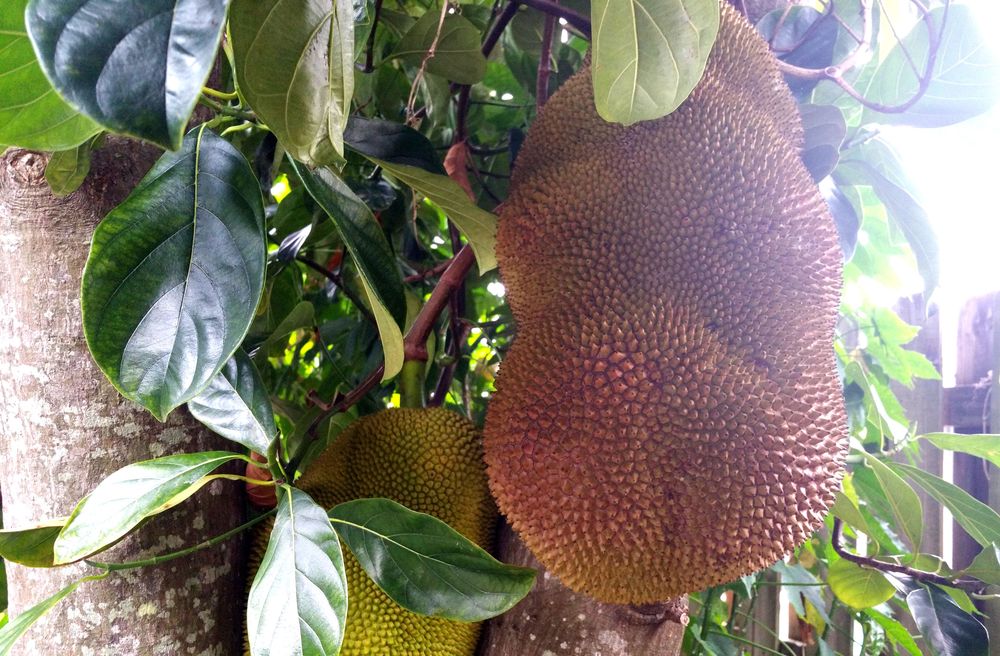
When it comes to edible perennials, this one takes the cake (or the taco). Let’s talk about the 80 pound fruit in the room, Jackfruit! This fruit is enormous in size as well as enormously versatile in the kitchen, and we love it. Packed with nutrients and even a topical wound healer, we are just so excited to tell you all about this wonder of a tree and give you every reason why you want it in your garden!
First, a little background info.
Jackfruit (Artocarpus heterophyllus) is an evergreen native to India, and is now cultivated across Africa, Asia, Australia, the Philippines, and South America. The tree itself can grow as high as 70 feet, but you can keep a tree fairly small and still get a harvest.
The fruit takes its place as the largest tree-borne fruit in the world. In truly tropical climates, they can reach 80 pounds or more! Younger and smaller trees produce smaller fruits (think 10-15 pounds). This means you can have this fruit even in a small yard.
5 Reasons to Love Jackfruit for your Health
- An Antioxidant Powerhouse – eaten regularly, the high vitamin C levels in jackfruit can alleviate certain skin issues, carotenoids support eye health, and the antioxidant levels in general can fight inflammation and boost immune health.
- Jam-Packed with Potassium – as we mentioned earlier, this is a good reason for those with kidney troubles to avoid the fruit, but for many this is a great boon to help lower borderline-high to high blood pressure.
- Fiber-Full – the high soluble and insoluble fiber in the fruit slows digestion and can help maintain healthy blood sugar levels, relieve constipation, and leave you feeling full for longer.
- Wound Healer – the leaves have been successfully used to heal wounds due to their antiseptic quality.
- Iron Rich – the seeds are high in iron, making them a perfect food for those low in iron or suffering from anemia.
A word to the wise: As much as we love it, jackfruit is not for everyone. If you are allergic to latex or birch pollen, it is best to avoid jackfruit. Likewise, if you have kidney issues, this fruit is not for you as its high levels of potassium could potentially be harmful.
So how the heck do you eat this thing?!
Unripe or under-ripe fruits
Unripe fruits that fall (as some will naturally) can be cut in large chunks and baked as a vegetable. Some like to purposefully harvest jackfruit under-ripe for its milder flavor and versatility as a meat substitute. The fruits at this stage can be used as a plant-based substitute for pulled pork, taco filling, curries, carnitas, and more depending on the seasonings and cooking method. This rise in popularity means you can find lots of recipes for cooking it on the internet.
Ripe Fruits
The fruits can be eaten ripe for dessert. They are delicious and very sweet, with a unique tropical flavor unlike anything else! They are often used as an ingredient in baked goods such as sweet breads, muffins, and cakes, as well as in sorbets, smoothies, and puddings. Juice can be boiled down for a wonderful syrup, great on pancakes!
Seeds
The seeds are poisonous until cooked, so it’s best to remove them from the flesh and boil them for 15 minutes or so. Allow them to cool and peel off the clear membrane before eating. They taste like boiled chestnuts or slightly sweet little potatoes.
Leaves
The young leaves can be cooked and eaten as a tasty green. They can also be made into a medicinal tea. The mature leaves are popularly used in several cultures as a wrap to steam dumplings. Some cultures even take toothpicks and create little baskets to steam rice and dal (lentils).
What about the rest of the plant?
The wood of the jackfruit tree is harvested to make furniture, doors, window frames, fish sauce barrels, and musical instruments. Now, we don’t imagine you will be planting a jackfruit tree farm anytime soon, but still interesting to know!
How do you grow jackfruit at home?
Okay, do I have you convinced to grow one in your backyard yet? I hope so.
Jackfruit can be grown by seed, grafts, or cuttings.
Most often, the trees are grown from seed, then named varieties are grafted on so the fruit has the expected flavor and latex content. If you purchase a grafted tree or graft one yourself, put it up in a mist bed with partial shade.
Cuttings are not as common, but hey, if you are motivated and your neighbor has a great tree, give it a whirl! Take a semi-hardwood cutting and soak it in rooting hormone. Place it in a mist bed and it should root after 60 days.
Be aware that jackfruit trees send down a deep tap root and they do not like to be transplanted. They should start off in a compostable pot so you can simply dig it into the ground when you are ready. They will need regular water until they are established and even then they are not drought resistant.
A note on harvesting your fruit: Due to the latex content, the sap tends to be gummy, oil your hands and tools for easier clean up.
How can you get the fruit while you are waiting for your tree to grow?
So, now that we’ve got you all jazzed on this incredible fruit, you are probably itching to try it, right? Up to four years can feel like a long time to wait to taste the fruits of your labor.
Have no fear, with the rising popularity of plant-based nutrition, jackfruit is quietly entering center stage. It is widely available on the internet either canned or vacuum-sealed for purchase. You can also find it cut up and frozen in some mainstream markets. Depending on where you live, you may be able to find it fresh in Asian markets and even at some farmer’s markets these days.
You may also be able to buy a fruit or try a piece at the nursery you plan to buy your tree from. That can be a great way to try several varieties and decide which you like the best. ‘Bangkok Lemon’ is also called ‘Thai Lemon’ and has less latex than many others, and a less musky flavor. This is a good thing, as jackfruit is related to durian, which is known for its strong smell and flavor that Westerners may not like. Don’t let this turn you off jackfruit. They are quite different. People describe the flavor of jackfruit as similar to Juicy Fruit gum, which we can agree with. It’s like nothing else, but really good.
So, have you tried it? Do you like it? I’m guessing you do if you are checking out this post! What is your favorite way to prepare it? We love it ripe in smoothies or under-ripe, cooked, and shredded in tacos. Let me know your thoughts, questions, or suggestions. I love to hear from you!
Until next time, Happy Gardening!
Mary