
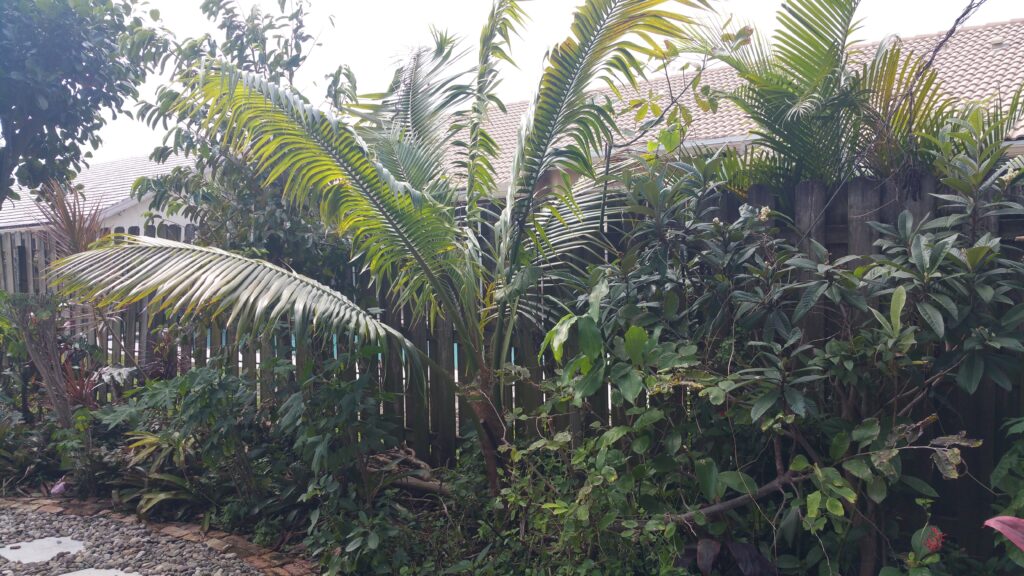
Post #70 Plant Profile: Coconut
Possibly one of the most versatile edible perennials in our Plant Profile Series, the humble coconut is a great start when it comes to subsistence gardening. It can provide everything from hydration to dinner, to clothing, shelter, and even fuel. In other words, if you find yourself stranded on an island rich with coconut trees, you’ll likely be just fine.
You don’t need to be stranded on an island to enjoy the many benefits of this plant, however. It is easy to grow and extremely useful.
Also, if you leave the husks out in the weather, they will soften and become coir, which is a terrific soil amendment. It is used as a sustainable alternative to peat. Peat dries out in our dry cool season and becomes nearly impossible to wet again. This is a good reason not to put a lot of commercial potting soil in your beds – dried out peat in the soil can hurt young plants. In contrast, coir holds water in the soil. Coir is also pH neutral, unlike peat, which is acidic.
5 Reasons to Love Coconut for your Health
- Electrolyte Replenisher – the milk of the young fruit is rich in sugar and vitamins, and acts like a natural electrolyte elixir.
- Healthy Fats – the nut meat is nutritious and rich in healthy fats.
- Good for Your Skin – the oil is soothing for sunburns and dry skin.
- Antibacterial Effects- the oil has possible antibacterial effects that can work both internally and externally.
- Rich in Antioxidants – eat the nut meat regularly for a dose of potent antioxidants.
How do you eat it?
It is not too hard to harvest the nuts and drink the water, eat the jelly from young nuts or the meat of mature ones, and produce your own coconut milk and coconut butter. With a heavy-duty extractor type juicer, you can even make coconut oil.
Water
Once the outer husk is removed, there are three indentations on the top of the shell. Using a chopstick or similar tool, find the softest indent and poke a hole to drink the water.
Traditionally, a machete is used to lop off the very top of the shell for easier access, but you must know how to safely handle a knife like this first!
Meat
Young coconuts can be drained of their milk or water as a beverage first, then using a spoon, the jelly of the immature meat can be eaten.
Older coconuts will have little water, and firm meat. This meat can be eaten right from the coconut (separate using a paring knife pointed away from your body or crack it off the shell). It can also be shredded and used in all sorts of cooked or raw dishes, adding flavor and nutritional value.
Oil
To get coconut oil, you must first put the meat through a food processor to get flakes. Then you can add water and blend it for several minutes, and strain it to get coconut milk. Put the milk in a large pan on the stove and heat it low and slow. Simmering it lightly will cause the oil to separate out. After a couple of hours, remove it from the heat and let it cool. The oil will float to the top and the solids will stay on the bottom. Use a fine metal mesh strainer to get clear, clean oil. This is not technically raw, but is a good traditional method. It’s a lot of work, though.
If you have a heavy-duty extractor type juicer, you can cold press virgin coconut oil from the flakes of meat you make in your food processor. This process is faster and less work. The oil can be used as a high temperature cooking oil, or as a dietary supplement added to smoothies or even coffee or tea drinks. It can also be emulsified into commercially sold coconut cream or milk.
There are videos and blog posts about both of these methods if you would like to try them. Remember to save the leftover solids. You can use them as a meat substitute or to thicken a dish. If you dry them, they can be ground into a nutritious flour.
What else is it useful for?
Husk – also called coir or fibre, is commonly used for cordage for marine uses, and as twine and rope in general.
Cocopeat – found between the fibres in the husk, this softer material is used in horticultural potting mixes, acting as a sponge to hold in moisture and a sustainable alternative to peat.
Shell – commonly used as charcoal once burned to pure carbon, or also used to make cups and bowls, or even buttons in its natural state.
Kernel (meat) – pressed for oil that can be used in candle production and body care products such as lotions, shampoos, and soaps.
Leaves – woven for baskets, hats, skirts, used that tatch rooves, create shelters, and dried for fuel.
How do you grow it?
Many varieties grow splendidly in our South Florida climate. Jamaican Tall and Panama Tall grow quickly. Dwarf varieties such as the Malayan Dwarf and hybrids (medium stature) like the Maypans are good choices for our neck of the woods as well.
The trees grow readily from sprouted coconuts. They are extremely salt tolerant and grow well in sand, which is why they are synonymous with hot, beachy, vacation areas. They do need water, although they can survive moderate, seasonal drought conditions.
These palms can withstand the high winds and severe flooding of coastal storms, making them ideal for South Florida’s wild weather squalls and hurricane season. Their trunks bend and sway, rather than snap, under pressure.
In your home garden, plant your coconut palms away from the house by at least 8-10 feet as their fronds will spread out as they grow. Provide regular water, and fertilize regularly. They can be susceptible to nutrient deficiencies, so it is best to fertilize every 3-4 months as needed with an organic, palm-specific fertilizer to replenish nutrients. Lob off limp, brown fronds as they die.
They much prefer being rooted in the ground over containers and will live much longer lives this way.
It is important to note that these are long-lived trees that are slow to fruit. It can take 6-10 years for a coconut palm to begin fruiting, and they do not reach maximum production until around 15-20 years old. They can live up to 80 years or so, and produce anywhere from 50-200 coconuts per year. These are all things to take into consideration when planning your garden.
Pests and Diseases
Watch out for Lethal Yellowing, the most common coconut palm disease in South Florida. The flowers will turn black, the coconuts will start dropping before they are mature, and finally the fronds turn yellow. It is safest to cut the trees before they fall and cause potential damage.
Bud rot and trunk rot are other lethal diseases to keep an eye out for. Preemptive foliar spraying of phosphoric acid can prevent bud rot, but trunk rot can only be avoided by avoiding any trunk wounds, or weaknesses.
Pests do attack coconut palms, but they are not a big problem overall. There are mites and leaf skeletonizers, weevils and mealy bugs, but usually not in such high numbers to cause heavy infestations.
Where can you find it for sale?
Coconuts themselves are sold in many markets throughout our region and most tropical regions. You can also find vendors at various beaches, roadside stands, even busy city intersections, selling “coco frio” or young coconuts filled with sweet coconut water that have been chilled overnight.
Find young saplings to plant at your local plant nursery, or look for individuals offering sales through local gardening clubs.
What is your favorite way to enjoy coconuts? I like a sweet coco frio right on the beach. There’s nothing better than that on a hot summer’s day! I also love to add coconut cream to my curries, and grate some fresh from our tree to add into so many dishes, both savory and sweet.
I hope this post finds you all well, my dear gardening readers!
Until next time,
Happy gardening!
Mary