
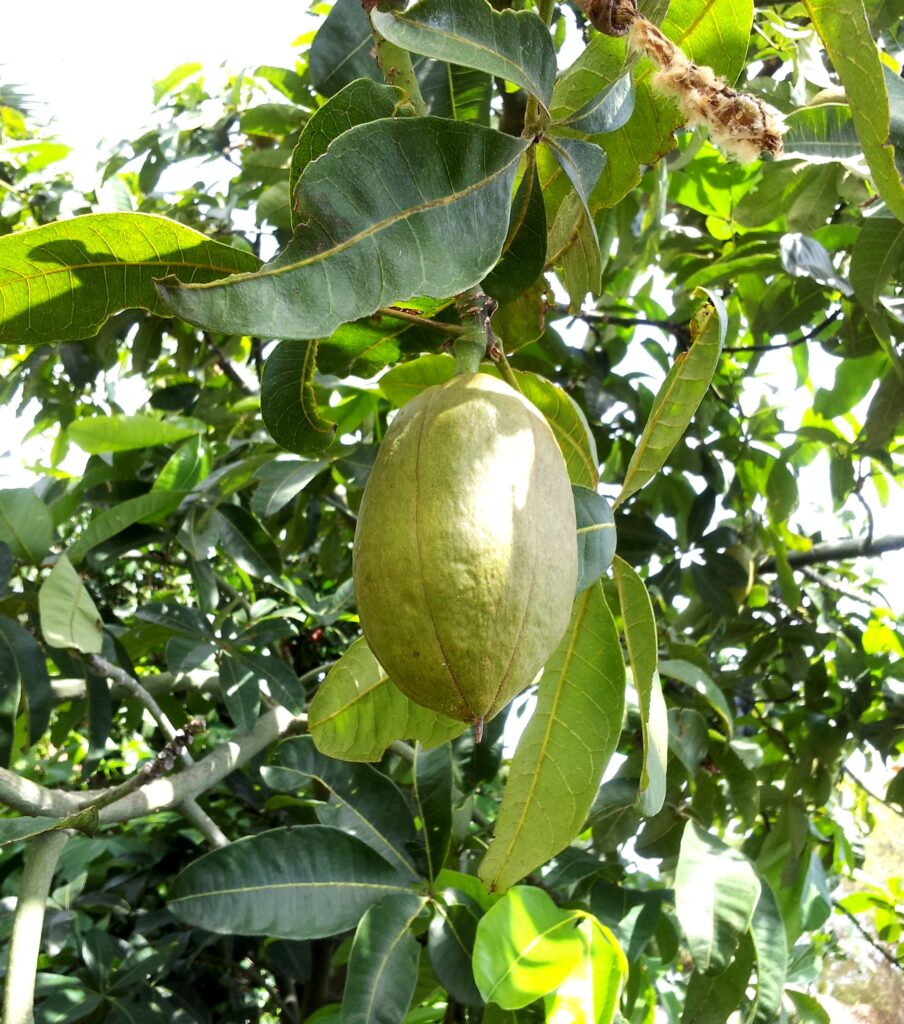
Post #71 Plant Profile: Malabar Nut
This unique perennial tree earns a place in our Plant Profile Series due to its many uses, its beauty, and its willingness to grow in our South Florida climate. If you’ve ever eaten the nuts of the malabar tree, you will most likely agree it’s a tree worth knowing about!
Most often found as a small houseplant and commonly called a “money tree”, the malabar tree is a terrific tree that deserves more attention as an addition to a South Florida garden. When left to its elements out of doors, it grows tall and provides a nice, shady canopy with attractive leaves and delicious, edible nuts.
Also commonly referred to as the malabar chestnut due to the nuts’ similarities, it is the easiest tropical nut tree to grow for food because you can literally crack and peel the nut with a thumbnail when fresh, and it’s not hard to crack when dried. By contrast, other popular tropical nuts need special processing, such as cashews, or have extremely hard shells, such as macadamia nuts.
Malabar Nuts for Your Health!
Malabar nuts contain close to 12% protein by weight, as well as minerals such as magnesium that are supportive of overall health.
The presence of antioxidants such as carotenoids, specifically known for eye health but supportive of so many more functions throughout the body, make the malabar nut a superior nutritional treat.
Anti-inflammatory and antimicrobial activities in malabar nuts have been discovered through research and show promise in supporting healthy lifestyles for those interested in preventing issues rather than t
How do you eat it?
The nuts form in a hard football-shaped hull that looks much like a cacao pod. In the hull, 6-12 nuts are nestled in a fluffy fuzz. The pods split when ready and dump the nuts on the ground, where they can then be harvested.
Fresh Malabar nuts are crunchy and slightly sweet. They should be harvested and processed quickly as they will start to go bad or sprout within a couple of days in our climate.
Raw – Enjoy as you would any raw nut, plain as a snack, on salads, to top an entree and more. Some people have trouble digesting the antinutrients (oxalates, phytic acid, and saponins) in the raw nuts, to avoid this, simply prepare the nuts through any process below.
Note: It is fine to eat a barely sprouted one raw, but there is no information on the edibility of the raw sprouts that have turned green.
Roasted – toss with some oil and seasonings if desired, then roast, keeping a watchful eye, until they are toasty brown.
Fried – saute in a pan with a bit of oil until golden, then toss with seasonings if desired. Makes a great snack.
Dried – spread nuts in a single layer on a pan or any clean, flat surface in an air-conditioned room and let sit for three weeks or so, stirring once a day. Dried nuts will keep indefinitely. Drying gives them more sweetness and a starchy texture which makes a good flour.
Sprouted – allow for a green sprout to form, then toss in stir fries or heat on their own for a tasty side dish.
Malabar Leaves
Cooked – use young leaves and eat as you would any cooked green, in stir fries, alone tossed with oil and herbs, or in soups and curries.
What else is it useful for?
A very popular house plant, malabar is often cultivated for sale in home goods stores and niche nurseries. They are also cultivated for sale as bonsai trees.
The wood is harvested for use in vault ceilings and church domes around the world.
How do you grow it?
The malabar tree grows will from both seed and cuttings. Water well, but let the soil dry out. It will mature between 4-5 year old. The tree cycles on and off flowering and fruiting all year. It boasts some of the biggest tree flowers in the world!
Ours, which we keep small through regular pruning, produces 8 to 12 quarts of nuts per year, plenty for a small family. When pruned, the tree stays at a moderate height of 12-15 feet, give or take, and provides a dense canopy for shade. Left to grow as it likes it can grow upwards of 60 feet but casts much less dense shade.
Where can you find it for sale?
If you are looking to try the nuts first, before investing in a whole tree about it, look to health food stores and online retailers. There is a chance someone at your local farmer’s market may be selling them as well.
If you are looking to buy a tree for your garden, look to your local plant nurseries for saplings. You can also purchase them online, usually touted as “money plants”.
I hoped you learned something about this incredible tree today! It is said that the malabar tree got it’s nickname as the money tree after a poor man prayed for money, then stumbled upon the tree’s ripe pods, dropping its nuts. He planted them, and when they readily grew into beautiful plants, he sold them to pay his debts.
True? Maybe. Either way, folklore is a fun way to learn about the world around us. Has this money plant brought you any miracles?! If you already incorporate the nuts into your diet, how do you use them? I like a big snacky handful myself!
I hope you’ve enjoyed this Plant Profile series as much as I’ve enjoyed writing it.
Until next time,
Happy Gardening!
Mary