
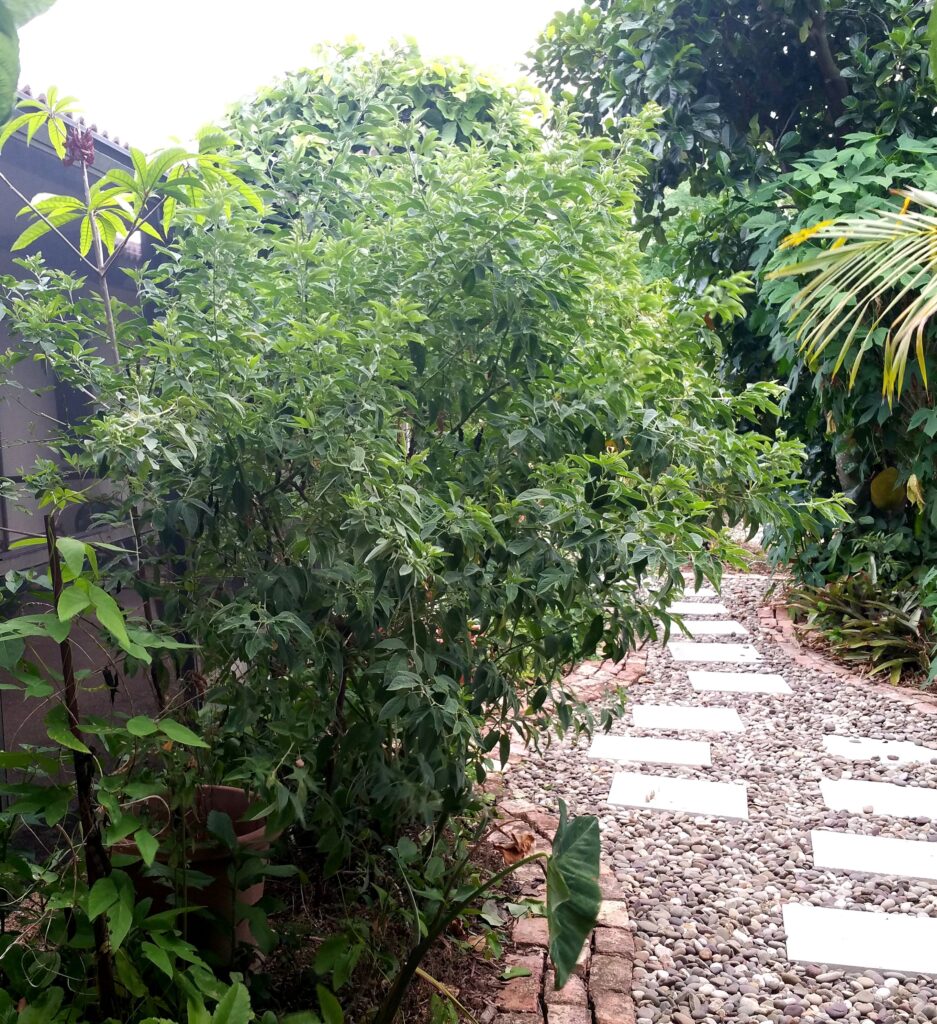
Post #72 Plant Profile: Pigeon Pea
A wonderfully sustainable source of food and kindling, pigeon pea plants are what’s on our radar today. They are true treasures of the forest garden. Although pigeon peas can grow with some success further North to about zone 9b, they thrive in our South Florida climate.
Whether you plant one or two as a food source or an entire row as a shade or windblock, these versatile plants have lots to offer to a suburban garden.
Grown as annuals or short-lived perennials (think 3-5 years), these fast growing shrubs produce beautiful yellow to red flowers above ground while the roots benefit the soil below.
The prolific pea pods that the shrub produces have a fresh taste similar to edamame and a satisfying crunchy texture when green. When dry, they make a delicious soup.
5 Reasons to Plant Pigeon Peas!
- Backyard Protein Source – just 1 cup of pigeon peas boasts 11 grams of heart healthy plant protein, it’s hard to beat that in the backyard garden!
- Nitrogen Fixers – a wonderful source of available nitrogen, pigeon pea plants amend the soil by merely existing!
- Conditions Compacted Soil – The tap root goes deep with pigeon peas. Use this to your advantage to break up an area of your yard with compacted, neglected soil.
- Compost – compost the shells, trimmings, and even the whole plant to benefit the garden. Chop and drop or mix into your compost pile if you have one.
- Fuel Source – if you are harvesting a whole, older plant, dry out the trunk and use it as a fuel source for small wood stoves or fire pits.
How do you eat them?
Fresh
Eat them right off the plant as you would any snacking pea when they are young and green. Or, shell them and use as you would green peas in cooking and salads. A popular dish, specifically in Puerto Rico is pigeon peas and rice blended with herbs and spices, often served alongside a fish entree.
Dried
Harvest when they have turned tannish and the peas inside the shell are dried. Store in an airtight container and use in any recipe calling for beans like garbanzo beans. The dried peas can also be milled into a flour quite easily and used as a bean flour substitute.
How do you grow Pigeon Peas?
An extremely easy to grow plant, they do well as long as they are warm enough and receive some water now and again. As we mentioned, they love the South Florida climate. Not only do they produce food, they also fix the nitrogen in the soil as a win-win for any backyard garden.
Fast growers, the simplest way to get them going is to purchase some dried pigeon peas from an Asian or Indian market, unless you have a friend with a tree. In that case, ask them to reserve a few dried pods worth of peas when the time comes. You can start the dried peas in trays and transplant, or direct sow into the ground.
Plant the dried peas in May for an October/November harvest. They will continue blooming and producing pods throughout the early winter. Their harvest tends to be the most productive in the first two years of growth.
Pests and Diseases
An all-around easy keeper, there’s not much concern here. They can get attacked once the pea pods are decidedly mature and tasty, but nip that in the bud by harvesting regularly.
The plant is susceptible to aphids, army ants, cutworms, and leafminers, but not commonly all out attacked by these pests.
Blight, white mold, and fungal diseases can affect the plants, again, not often. If it becomes a real problem, it is best to harvest the whole tree and either burn it or bag it for trash. Fungal issues will need to be addressed on a soil level once the tree is removed.
Where can you find Pigeon Peas for sale?
If you want to try them out before growing bushels of them, find them dried in Asian or Indian markets either whole or split. The split version is generally prepared as one would prepare any Indian-style dahl dish. Peruse your local farmer’s markets in the fall and early winter for piles of fresh, unshelled green pods.
My experience growing this useful shrub has been primarily as a fresh food source. Do any of our readers incorporate pigeon peas for multiple uses? Such as a windbreak and food source combined? In this case, do you end up with such an abundance that keeping a store of dried peas is attainable?
Since I only keep a couple plants, my peas are usually gone before they ever get to the dried stage!
Keep in touch, we love hearing from you! Share your gardening stories, successes and failures alike. We are all here to learn and to teach.
Until next time,
Happy Gardening,
Mary