
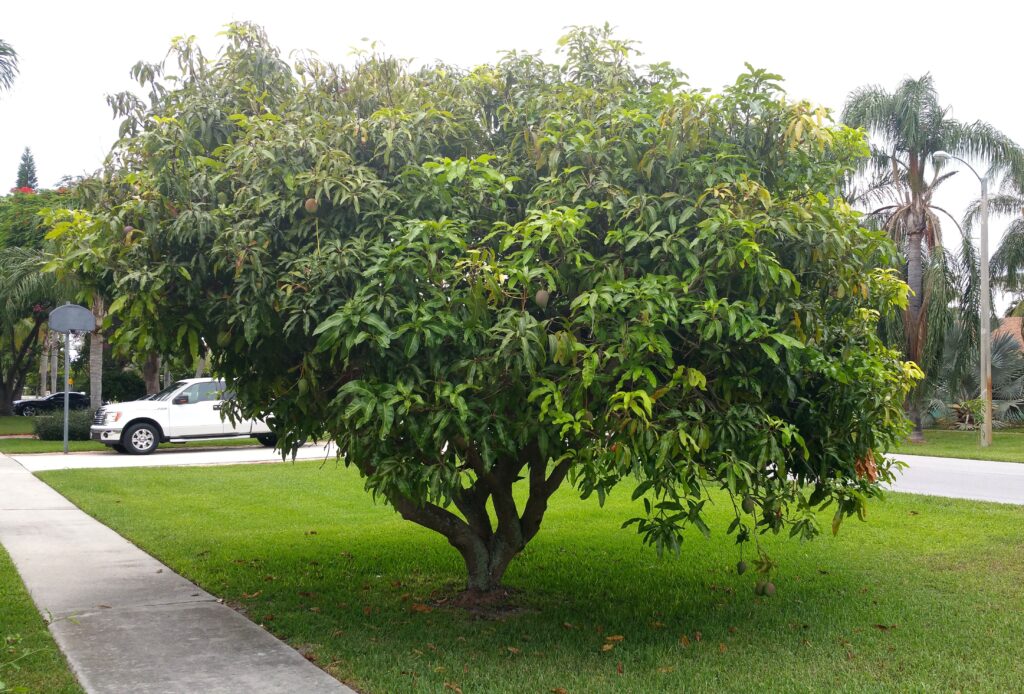
Post #73 Plant Profile: Mango (Mangifera indica)
Oh, the magnificent mangoes of South Florida! We would be remiss if we did not include these gems in our plant profile series. Mangoes are one of the best fruits we can grow here. Not only are they delicious, nutrient dense, and versatile on the plate (and in the blender), they are highly productive too.
Commercial mango production in South Florida is a rather large industry, employing many residents to farm the 2000+ acres of mango farms in our area. They naturally love to grow in this climate, which is what makes them a great backyard crop as well.
There are early-, mid- and late-season varieties that grow quite well here in zone 11a. If your yard is on the smaller size, consider the dwarf varieties. The larger varieties can also be pruned and kept a manageable size for a suburban yard, it just requires a bit more maintenance to keep them in check.
5 Reasons to Plant a Mango Tree (or 3)!
- Long Fruiting Season – mature mango trees provide prolific fruits from May through October, more than enough to store in a variety of ways to get you through the late fall and winter months when they are not producing.
- Nutrition – mango fruits are rich in vitamin A, and also provide beneficial quantities of vitamins C, B6 and E, fiber, and minerals copper, potassium, and magnesium.
- Anti-Inflammatory – high in antioxidants, devoid of sodium, and packed with potassium, mangoes are one of nature’s perfect anti-inflammatories.
- Made in the Shade – a mature mango tree’s high and thick canopy provides a shady grove for an outdoor sitting area, just be sure to plant the sapling strategically so you do not shade out other sun-loving plants.
- Year-round Beauty – mango trees are an attractive addition to any suburban landscape with their glossy, leathery, dark green, elliptical leaves. The trunks grow thick and strong, providing an anchor to your yard. The flowers are small and delicate, coming in before the fruiting season begins. And lastly, their beautiful, oblong green to deep crimson fruits stand out as they grow.
How Do You Grow a Mango Tree?
- Plan – make sure you choose an ideal location. If you are planting a dwarf variety or intend to keep a standard tree small by pruning, plan a 12-15 foot area for your tree. Locate a sunny spot with well drained soil – ideal conditions are a slightly acidic and sandy terrain.
- Plant – dig a hole two times as large as the root ball of the sapling, place sapling, then backfill soil, tamping to secure the tree in place.
- Offer Assistance – secure wooden dowels on either side of the sapling and use bungee cords or rope to support the tree as its roots get their bearings.
- Water Deeply – frequent waterings for a moist, not drenched soil will encourage growth and a tree rooted well into the ground.
- Mulch Well – apply 2-6 inches of mulch around the base of each tree to retain moisture.
- Pro Tip – push away the mulch in a small area when watering, so the water goes directly into the soil and the roots below.
- Take Notes – in your trusty gardening notebook/calendar, write down the variety and the date that you planted it. Note the location in your yard if you have more than one mango tree.
How Do You Care For an Established Mango Tree?
Mango trees mature at around 4-6 years old. An average sapling purchased at a plant nursery is usually already around a year old, so take that into consideration.
A few more tips:
- Keep grass away – maintain a 2-5 foot grass free area around the base of each tree.
- Keep the weed whacker away – weed whackers, or any mechanical equipment for that matter, can easily tear into the trunks and cause damage or death.
- Don’t stop mulching – even as an established tree, it will thrive with a layer of mulch.
- Pruning:
- Large trees can be kept small by tip pruning. To do this, begin pruning just the tips off all branches while the plant is young, and keep it up as needed.
- Dwarf varieties will cut down a lot on the need to prune, just prune to shape and that should keep them in line.
Pesky Considerations
Mango trees generally do not need too much in the way of pest and disease prevention, although they are susceptible to some damage.
- Pests – mites, thrips, scale, and beetles
- Diseases – scab, mildew, wilt, and rot
- Anthracnose – mangoes are most susceptible to this fungal disease, and a coat of fungicide can be applied ongoing from blooms through harvest.
How do you eat them?
Mango trees begin producing viable fruit at around 3-5 years old. This may sound like forever from when you initially plant your tree(s), but it will be well worth the wait as they will continue to fruit for anywhere from 3-40 years depending on how well taken care of they are.
The ideal time to pick a mango depends on the variety and what you are using it for. A savory dish usually calls for a green, or less ripe mango. A dessert recipe will implore a soft and juicy flesh.
Some older Mango varieties have a little bit of turpentine taste, but breeders have been working on this. ‘Glen’ is one of the best, with no resinous flavor at all. It tastes a lot like a peach!
Some kinds of Mango are good eaten green as a vegetable. One of the best of these is ‘Nam Doc Mai’. Visit growers and taste the fruits in season to choose your favorites. It’s worth the effort, since you will have your tree for decades.
Where can you find Mangoes for sale?
Finding saplings at your local nurseries. To try a fruit variety before you buy a tree, check out your local farmer’s markets to try out local varieties farmers in your area are growing successfully.
Wrap Up
If you have yet to take a trip to the Fairchild Tropical Botanic Garden in Miami, consider it the next time you are in their neck of the woods… especially during mango season. They even throw an annual mango festival. Nearing its 30th year, this festival is fun for the whole family with all sorts of mango themed delights.
If you have been, share with us your highlights. Do you have mangoes growing in your yard? What varieties do you love? How do you prepare them or do you just eat them right off the tree? We love them almost over ripe in sweet smoothies and under ripe in savory dishes such as pickled salads.
Suffice it to say, there is no wrong way to eat a mango.
Until Next time,
Happy Gardening,
Mary