
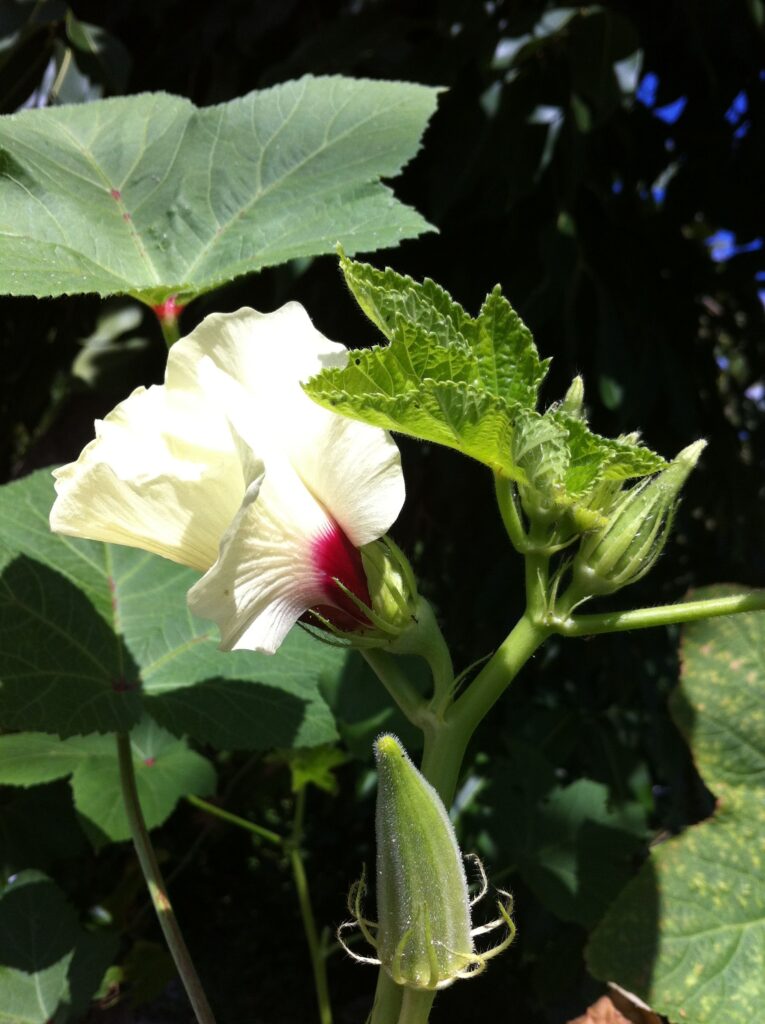
Post #74 Plant Profile: Okra (Abelmoschus esculentus)
If you are looking for a vegetable that can outshine the brutal heat of summer, look no further. Okra’s extensive harvest season runs from March through November here in South Florida, lucky us! And the best part is, it is easy to grow and quick to harvest.
Now, when you think of okra you may harken back to some slimy boiled experiment you once tried after falling in love with the crispy, crunchy texture of this vegetable in a restaurant dish. But don’t give up on this humble vegetable, with a few tips and pointers, you’ll be growing and cooking delectable okra like a professional in no time.
5 Reasons to grow Okra for Your Health!
- Fiber Rich – just a half cup (or 100 grams) of okra provides 11% of the recommended average daily intake of fiber. Eat a cup and you’re almost a quarter of the way there!
- Supports Heart Health – not only does the fiber content help this most important organ, but okra is also packed with magnesium, an essential mineral for heart health.
- Antioxidant Support – rich in vitamin C and glutathione, okra assists in liver detoxification and can help boost immune health when eaten regularly.
- Diversify your Pallet – the more variety you add to your diet in the way of home grown vegetables, the more likely you are to consume above and beyond recommended daily servings without even noticing it!
- Variety is the spice of life – okra offers 3 edible choices on one plant, each packed with nutrients to feed your body well. Continue reading to learn how to eat the flowers and leaves as well as the pods this plant is most commonly known for.
How do you grow Okra?
One of the most productive vegetables for our hot weather, these fast growers readily start from seeds sown directly in the garden. Medium feeders, sow seeds in a bed prepared with aged compost and they should take off with ease. Okra is ready to harvest 40-50 days after seeding.
A popular variety grown for its flavor and general unfussiness in the garden is the Clemson Spineless variety.
Okra will continue to fruit all season, reseed if you allow it, and eventually perennialize itself in your garden. A plant that plays well with others, it does have some favorites. It grows exceptionally well when interspersed with melons, black-eyed peas, eggplants, and cucumbers.
The pods grow very fast and the older ones become woody. Check the seed packet and experiment to see how big you can let them get before harvesting. It is usually around 3”-6”, depending on the variety. If the pods are still green but have become tough, open them and shell the seeds like peas. The seeds from the bigger pods aren’t slimy and can be eaten raw or cooked.
Pesky Considerations
Aphids, stink bugs, spider mites – oh my! These critters may choose to invade and attack. If they do, use a natural insecticide or bring in the beneficial bug troops – ladybugs, right this way!
Consider companion planting for pest control – calendula and sweet peppers can help keep some of the pests at bay.
Fungus can appear and most commonly does with overwatering or crowded garden beds. Avoid powdery mildew, root root and other common ailments by using well-draining soil and allowing ample space between mature plants by sowing seeds at least 12 feet apart.
Consider a heavy spraying of diluted neem oil if the mildew begins to take over. Cut off the worst of it and spray the rest of the plant generously.
How do you eat Okra (the non-slimy way)?
Through continuous harvesting, plants can be kept in production for many months. Harvest the pods when they are young (under 4 inches) for best results.
- Raw – eat raw for a delicious snack right off the plant.
- Pickle – the acid in the vinegar keeps the pods crunchy and cuts down on the mucilage or slime.
- Saute – the young pods can be sauted for a superior texture and taste profile. Soak them in vinegar first to preserve the crunch.
- Fry – a quick fry at a high temperature can preserve the texture and tastes wonderful.
- Flowers and Leaves – the pretty flowers can be eaten raw, and the young leaves can be cooked. They have a pleasant sour flavor.
Okay, who here has grown okra and actually harvested and served it with success? Dish! Tell us how you use the pods in a recipe, or if you are feeling extra generous, share a recipe in the comments section below! Our recipe boxes are much more robust, and appreciated, when shared.
I’m pretty uncomplicated when it comes to okra. I like my pods straight off the bush, raw and crunchy. The perfect garden snack!
Until Next time,
Happy Gardening,
Mary