
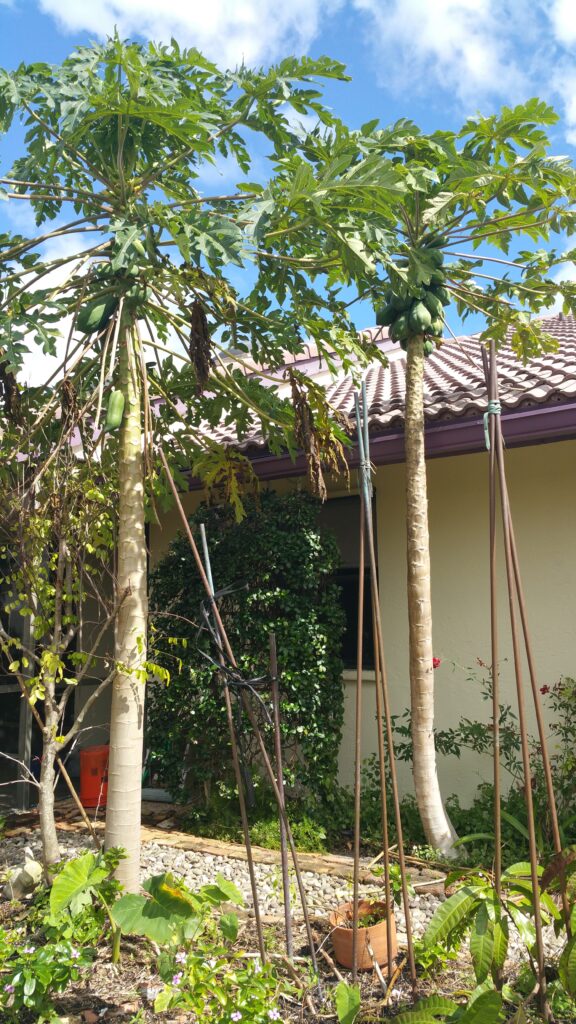
Post #69 Plant Profile: Papaya (Carica papaya)
As we continue our plant profile series, we arrive today at yet another powerfully nutritive tropical fruit: Papaya. Also called papaw, the papaya tree is a fast growing, short-lived perennial and we love it!
With a lifespan of 3-5 years, papaya begins producing fruit at the end of its first year. Its highest fruit production is generally in its second year, then it begins to slow down. The fruit, fruit seeds, and leaves are all consumed. The fruits range in size from about a pound, up to almost 20!
5 Reasons to Love Papaya for your Health
- Digestive Aid – rich in an enzyme called papain that helps break down protein in the body. Papain is extracted from the fruit to make a supplement, but you can also just begin a protein rich meal with some fresh papaya slices to get a similar effect.
- Supports Healthy Skin – rich in vitamins A and E, and antioxidants like vitamin C, a precursor to collagen production, regular consumption of papaya may give you an extra glow.
- Heart Healthy – packed with fiber, and crucial minerals potassium and magnesium, papaya supports health health naturally.
- Good for the Bones! – Also rich in vitamin K, which supports calcium absorption, eat this fruit for strong bones.
- Immune Booster – a small to medium papaya can supply a full daily dose of vitamin C, not to mention the antioxidant powerhouses lycopene, zeaxanthin, and lutein which are being studied for their possible anti-cancer effects.
Allergy Warning: Not common, but worth mentioning, papaya may cause cross-reactive allergy symptoms by those with latex allergies.
How do you eat it?
Green Fruits
These can be peeled and shredded raw for salad, or cut in chunks and cooked as a vegetable. Cooking with the peel on will make the flesh bitter so be sure to peel it.
Ripe Fruits
Peel and enjoy much like any melon, alone or in fruit salads, parfaits, smoothies, or make a sorbet. Commercially it is popular dried or canned which significantly prolongs its shelf life.
Seeds
These have a spicy taste, much like radishes. They are often included whole and fresh with the fruit in salads. Mature seeds can be dried and ground as a pepper substitute.
Leaves
The leaves and fruits contain digestive enzymes. Young leaves can be used as a meat tenderizer.
How do you grow it?
Papayas are very prolific and worthwhile to grow. The plants don’t take much space or shade out other plants. They usually bear in winter in my garden, but some varieties can fruit any time of year.
It grows and bears the first year from seed and does not like transplanting or pots due to its very long taproot. Older plants can be cut short for ease of harvest, though not all will survive that process. Try pinching out the growing tip of a young tree before it gets much past 4’ tall, the young plant is more likely to survive this. Pinching the top will also cause it to branch.
Papayas will re-seed freely once established. Generally, male and female trees are needed to set fruit, so plant lots of seeds and leave one male to grow per patch. However, there are now a few self pollinating varieties with male and female flowers on one tree, which would be better for a very small garden. The fragrant male flowers grow in clusters on long stems; female flowers are larger and single.
Harvesting Tip: You’ll be fighting raccoons and other marauders for ripe fruits, so harvest them as soon as they show a little color and let them finish ripening inside the house.
Pests and Diseases
Although susceptible to some diseases transmitted by pests, such as spotted wilt disease or papaw ringspot virus, or root rot caused by fungi, papaya is generally resilient.
If an individual tree develops problems, it is better to pull it out and let others replace it, since each tree will not live very long anyway.
Where can you find it for sale?
It’s best to grow it from seed since it doesn’t take well to transplanting. Use fresh seeds from a ripe, organic, non-GMO papaya, or buy a packet of dried seeds online or from a local nursery.
The fruit is sold in most grocery stores and many markets. Try a local farmer’s market to procure a variety that grows well in your area.
Do you have experience growing papaya? Once it gets established in your yard or garden, it readily self seeds which makes it an easy keeper. Well, except that you may find yourself pulling the babies up here and there so you don’t end up with a papaya forest!
I hope you learned something new about papaya today. Share some information if you have some. Ask a question if you have one.
Stay in touch, we all love hearing from you, our dear gardeners!
Until Next Time,
Happy Gardening!
Mary