
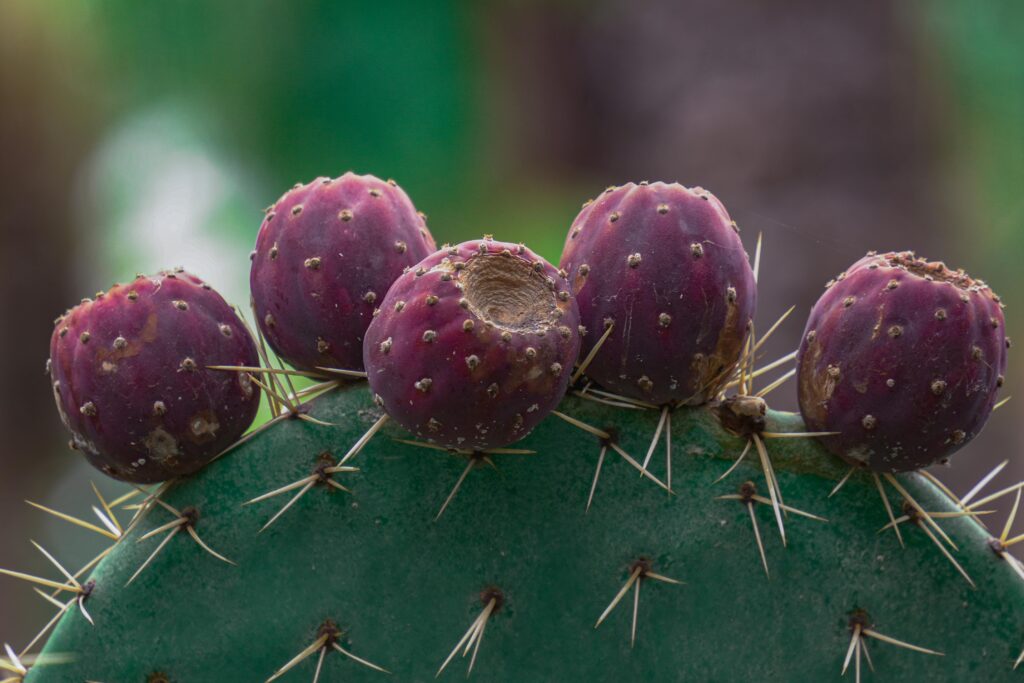
Post #83 Plant Profile: Prickly Pear Cactus (Opuntia spp.)
An edible, perennial cactus! Now we are getting to the nitty gritty of what can be foraged in our Plant Profile series. A traditional food in several cultures, most notably Latin America, this cactus is quite tasty once you get past the thorns.
There are several subspecies that grow well in South Florida, but the native variety, Opuntia austrina, is the most prolific around here.
These cacti have joints called cladodes or more commonly referred to as “pads” in culinary use. The Opuntia group are often referred to as the beaver-tail cactus because their pads are significantly larger than other cacti species.
Their beautiful, shockingly pink fruits are also quite tasty. As are their bright yellow flowers. Kept in line, they make a pretty and colorful addition to a suburban landscape. You may even see them planted strictly as ornamentals in some gardens.
Historically grown as protection fences that double as a food source, several varieties grow as far north as Massachusetts and spread west across the Southern United States clear to the Pacific Ocean.
Highly adaptable, they are salt and drought tolerant and will grow in substandard soil conditions as long as they are not waterlogged. They store all the water they need in their pads and prefer an even sandy soil to drain out the excess moisture around their roots. No wet toes for these plants!
Nutritional Benefits – or 5 Reasons to Love Prickly Pear Cactus!
It may be prickly, but it’s packed with a surprising amount of nutrition. It’s well worth the effort to contend with the thorns.
- Carotenoid Rich – the pads deliver a potent dose of vitamin A, a potent anti-aging antioxidant.
- Great Source of Potassium AND Water – wouldn’t you know, a drought-resistant, desert loving plant that can actually provide you with electrolytes when you run out of water?! Yes please!
- Vitamin C – Oh how we love thee. All edible parts of the cactus have significant amounts of highly absorbable vitamin C, the fruits generally holding the highest concentration.
- HIgh Fiber, Low Calorie – Looking to slim down? Consider adding prickly pear pads to your diet, it offers bulk and nutritional value to leave you feeling more satiated without going overboard on calories, much like the chayote.
- Magnesium for Your Heart – Dietary sources of magnesium are crucial to our health and longevity. Not only is magnesium essential for heart health, its presence is also needed for over 300 other functions in the body.
How do you Harvest, Prepare, and Eat Prickly Pear Cactus?
Harvest
Pads and Fruit – There are larger thorns, called glochids, and smaller, hairlike spines on both the pad and the fruit. Wear thick gloves and use tongs to avoid the thorns. Using a sharp, sanitized knife, cleanly cut the pads at the joint or fruit at the base. Do not harvest the fruits until they are at peak ripeness as they will not continue to ripen once picked.
Flowers – If you are careful you can harvest the flowers without any armor on, but gloves are still not a bad idea as we have learned from experience. Simply snip the flower at the base, keeping the sepal intact.
Tip: Harvest earlier in the day for less acid content, and harvest younger pads for their tenderness.
Prepare
Pads
- Use a hose to wash off some of the smaller spines on the pads, then remove the glochids and remaining spines from both sides with your knife.
- Then, cut around the outside like you are cutting the crust off a slice of bread, taking care to cut away a large portion (maybe a half inch) from the base.
- Now you can peel the rest of the skin away with a vegetable peeler or paring knife.
Fruits
- Keeping on your gloves, use the tongs to gently burn the glochids and spines off, taking care to get the tops and bottoms of the fruit as well as the sides.
- Then, cut the tops and bottoms off, make a slice from top to bottom, and gently peel away the skin using your fingers to slide between the skin and flesh.
- Depending on how spiny the fruit is, some choose to skip the burning step, but we suggest leaving that for more seasoned prickly pear connoisseurs.
Flowers
- Simply separate the petals from the sepal, reserve petals and compost sepal.
Eat
There are three edible parts of the cactus: the pads, the flowers, and the fruits.
Pads (Nopales) – Grill them whole then slice for salads, taco or omelet filling, salsas, and more. Or use them as an edible platter for meat taco fillings. Boil and add to soup or chop up alongside fresh tomatoes and red onion for a chunky nopale salad.
Flowers – eat raw as a garnish or mixed into salads, a beautiful and nutritious addition to any dish – savory or sweet!
Fruit (Tunas) – Eat them raw out of hand once properly peeled, or add to salads and other raw dishes. Blend in smoothies or homemade sorbets. Juice them and make a simple syrup. MAKe jelly, delicious! Their vibrant color adds beauty to any dish.
Be aware, though, due to the seed content of the fruit, if you decide to binge on the fruit you may find yourself with a very upset tummy. There have been cases of people needing to get medical help after eating too many fruits. Everything in moderation.
How do you grow Prickly Pear Cactus?
It is a slow grower, but once established you’ll likely never get rid of it even if you want to – so bear that in mind when a friend offers you a pad to plant.
Also, be very intentional about where this plant is placed in your forest garden or otherwise. The thorns are no joke, especially when it comes to curious kiddos. Plant it somewhere out of the way, where it will have room to grow and spread (because it will).
If you choose to grow the cactus from seed, it will take several months to root and several years to get fully established. It is more commonly grown from a pad.
Follow these quick steps to growing prickly pear successfully:
- Remove a pad from the mother plant
- Place it upright in a dry, warm place until the base seals off, about a week or so
- Plant in a bed or container of loamy, sandy soil in full sun
- Water regularly, letting it dry out completely between waterings until it is established
A Tip on Weeds:
Pulling weeds around the base and under the branching pads can prove to be near impossible as it matures, so take that into consideration as well when choosing a spot for it to thrive.
Consider putting down garden cloth and topping up with a thick layer of mulch to tamp down weeds.
Pesky Considerations
The Cactus Moth, an invasive moth species that arrived in Florida in 1989, is the only considerable threat to the cactus. Yet a considerable threat it is! The moths eat the inside of the pads and kill the entire plant.
If the soil the cactus is growing in remains too moist and is not allowed to dry out, root rot, scale, and mealy bugs can quickly take down a healthy plant.
Keep the soil well drained and let the plant dry out considerably between watering. In fact, unless we are deep into the dry season, we don’t bother watering our cacti at all. They are quite drought resistant.
Where can you find Prickly Pear Cactus for sale?
If you are looking for a rooted pad to plant, check out your local nurseries. Seeds are available online, but we highly suggest starting with a pad, it is much faster and generally more reliable.
If you are looking to buy the pads to eat, check out your local Mexican Markets, and possibly the mainstream supermarket. farmer’s markets will usually have them seasonally here in South Florida. They are generally sold scraped (no thorns), sometimes peeled, and if you are very lucky you may find them peeled AND diced for sale.
Although you may find the fruits for sale at the market, they are much better freshly picked. We suggest checking out the farmer’s markets in season or relying on neighbor’s plants or your own plants to harvest and eat fresh.
So, do you have prickly pear cactus growing in your forest garden? If not, why not? I know it can get cumbersome, but if it is properly and regularly maintained, it is a very pretty addition. If you have an area of your perimeter that lacks a fence, consider planting it there. Keep it from getting too wide by harvesting from the sides regularly.
If you’ve got a great prickly pear plant going in an opportune location, share a picture with us! We’d love to see what you are up to. Garden design is so fun, and even more enjoyable when we can share ideas!
Until Next time,
Happy Gardening,
Mary