
Post #67 Plant Profile: Coromandel
We’re going to begin this profile with a warning. Coromandel, also known as tropical primrose or Chinese violet, is a fantastic edible perennial with ornamental flowers, BUT, if you don’t already have it, don’t plant it. It is a class 2 invasive species in South Florida.
I was given a plant by an older gardening friend, but it was starting to get out of hand and I was about to pull it out when I stumbled on an article on the internet that positively identified it and showed it is being grown for food in Asian countries. Of course, that interested me right away and I tried it. Sure enough, it was a perfect solution to a problem we had. More on that below.
Years later, I found out it had made the invasive plant lists. Now what? Well, if you have this plant, you may never be able to get rid of it. If you can, do so. Pull it out. But if it’s well established, as it was for us, the best you can do is keep it in bounds or pull it out whenever you find it, preferably before it sets seeds. Either way, you might as well eat what you pull, right?
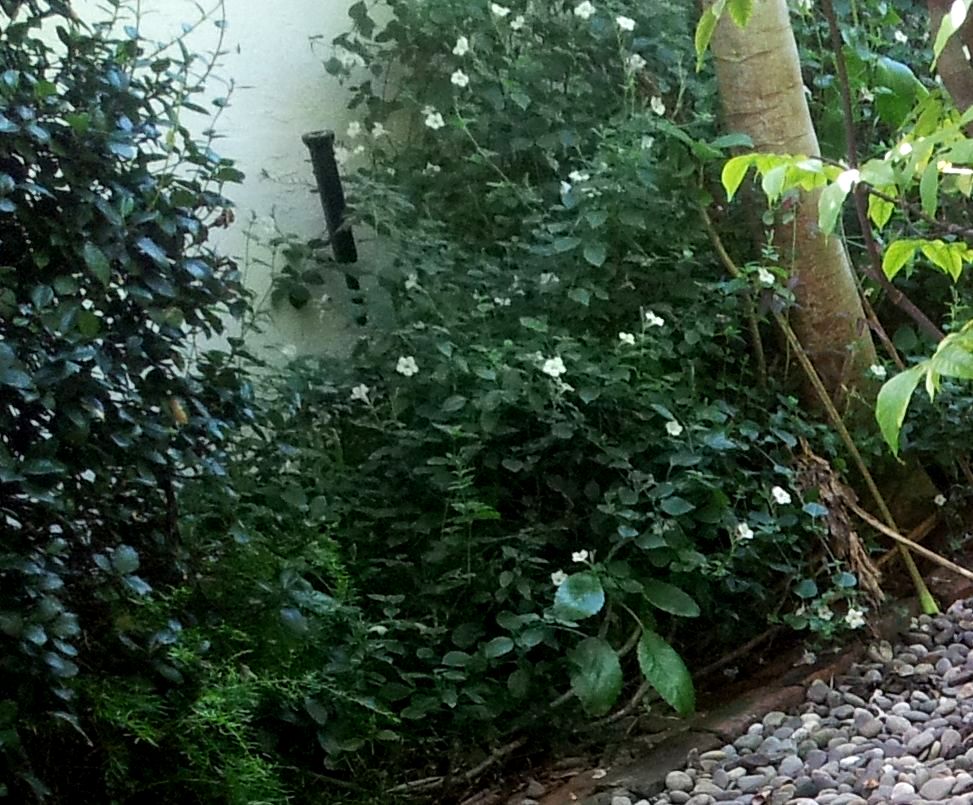
Coromandel is a pretty, sprawling plant with dark green leaves and weak stems that will bush out and ramble around to about 2-3 feet in height. If it finds a wall or fence to support itself, it can grow up to 6 feet. The trumpet-shaped flowers range from light purple to white. There is a non-invasive form that has yellow-variegated leaves and deeper-colored flowers. Both forms can be found in nurseries and garden centers.
The reason the variegated form is not invasive is that, like all variegated plants, it is not as vigorous, so it doesn’t spread as aggressively. That’s because the lighter parts of the leaves don’t have as much chlorophyll, and chlorophyll is what drives photosynthesis. It’s what enables the plant to make energy from sunlight. It’s also a big part of what makes it nutritious. But both forms can be eaten.
If you do have it growing in your yard, or you are simply interested in learning more about this controversial plant, by all means, read on! Just please, please, do not go seeking it out to transplant into your garden. In fact, if you see it for sale at a local garden center, you might want to do a solid for the ecosystem and let the staff know that it is an invasive plant in our area.
Why You’ll Love Coromandel for your Health
- Several studies suggest coromandel has anti-inflammatory and antioxidant properties. Combined with its nutrient dense profile, this makes it a fantastic green to keep in your weekly salad rotation.
- It has long been used as a folk remedy for coughs and shortness of breath.
- There are studies that show coromandel to be a great nutritive support for those with high blood sugar. It can also be used as a preventative of this condition in conjunction with a whole foods diet.
How do you eat it?
For years we searched for a warm-season green to bridge the textures and flavors of the tropical salad leaves we grow. Lettuce works perfectly, but we can’t grow it in the warm season, and it takes a month of cool weather before it’s ready to eat.
So just imagine our surprise when we found we had just the thing already growing prolifically in our garden – coromandel!
The tender young leaves have a mild flavor and texture similar to baby spinach. And like spinach, they take only a few minutes to cook. The flowers are edible as well and add a beautiful touch to any fresh salad.
What else is it useful for?
Coromandel is perfect for quickly covering anything unattractive in the landscape. It also makes a pretty hanging basket, which is how you may find it presented in garden centers.
How do you grow it?
It grows itself quite well once established. So well, in fact, you’ll be hard pressed to get rid of it! So if you’ve got it growing in your garden, make friends with it and keep it under control by pulling and harvesting regularly.
It re-seeds prolifically and also roots at stem nodes, so it can get out of hand pretty quickly if you don’t keep an eye on it. But it is also very easy to pull out, being shallow-rooted and lightweight. You’ll have to keep after new plants coming up from seed, though. Turn your back and it will be in several of your beds before you know it.
A 3 foot square patch of it per person in your household should be plenty. The rest you can pull up by the roots and compost to make room for more variety! Good thing I found a use for it because it really lives up to its class 2 invasive status. We’ve always got a bounty of it to harvest.
Speaking of harvesting, be sure to get after it well before it goes to seed, which is one of the ways it easily spreads itself. So if you have way more than you need, harvest the excess and either give it away or compost it. If seed heads do form, be sure to put them in trash bags and throw them away.
Where can you find it?
To reiterate, please do not go seeking this plant out. If you do happen to see the plant for sale locally, at the very least refrain from buying it, and at best, let the staff know they are selling an invasive plant. Coromandel is growing in many older gardens already because it was popular for a long time.
Ever since I found out coromandel is a delectable and nutritious green that can substitute for lettuce in our raw mixed green salads, I’ve happily kept a patch contained in our forest garden. Beyond salad, we use it as a go-to green for any recipe, from soups to sautes, that calls for a spinach-like ingredient.
Do you have coromandel growing in your garden? Did you know it was invasive or did you plant it as an ornamental unknowingly? It is quite the pretty sprawler! If you cook with it, how do you prepare it? We always look forward to your thoughts, ideas, and comments!
Until next time, Happy gardening!
Mary